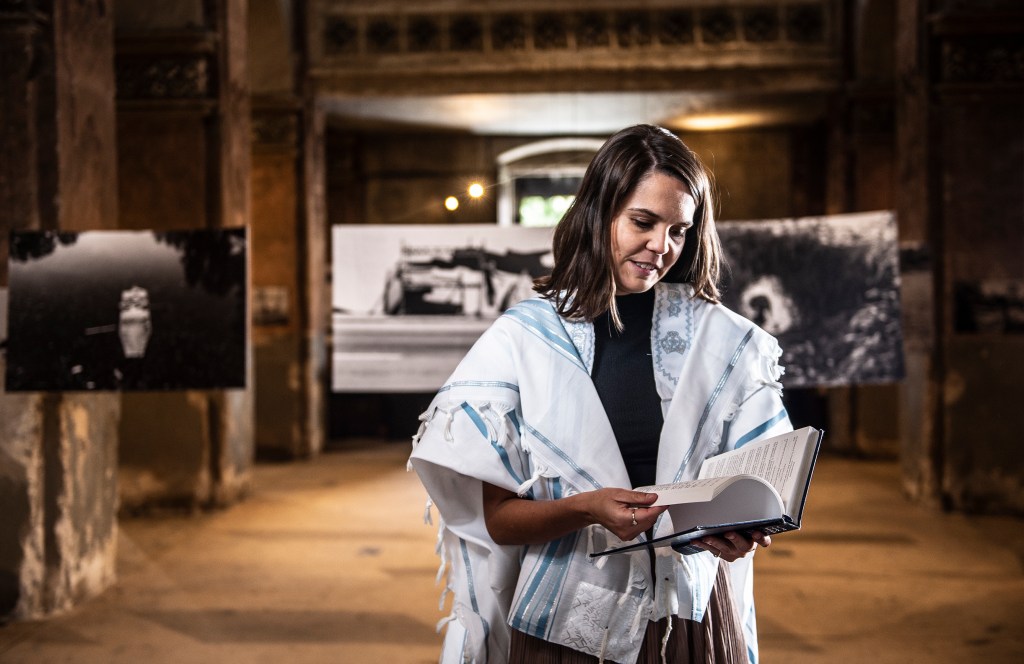
I am a Czech-born rabbi, and I serve at Westminster Synagogue in London.
That sentence would have sounded impossible for most of the last century. I grew up in a country where Jewish life had been nearly erased twice, first by the Shoah and then by forty years of communism. I did not grow up Jewish myself. I found Judaism through questions: about meaning, about God, about how to live. The questions led me to study at Charles University in Prague, then to rabbinic training in Potsdam, Jerusalem and London, and eventually to becoming the first Czech woman to be ordained a rabbi.
Before ordination, I completed a PhD in Jewish theology, writing on the Maharal of Prague. His teaching still shapes how I read Torah: as a living presence, not a museum piece, something that speaks to the here and now.
That distinction, living presence versus museum piece, is really the heart of my work. Westminster Synagogue is home to the Czech Memorial Scrolls: over fifteen hundred Torah scrolls from the Jewish communities of Bohemia and Moravia, rescued and sent out into the world. I came to London from the very communities those scrolls came from. For me they are not only a memorial. They are a question addressed to my generation: what will Jewish life in Europe become next?
I spend my days trying to answer it. I teach, I write, I lead services and life cycle ceremonies, and I travel to small communities across Central Europe where Jewish life is quietly waking up again. My first book, an unorthodox introduction to Judaism, opened a conversation in the Czech Republic that I am still having today. I believe Judaism at its best is ethical monotheism in action: it asks us to leave the world better than we found it, and to build communities where everyone matters.
Outside the synagogue, I am usually in nature, in a gallery, on a train somewhere, or crocheting my way through a podcast.